Релігійний одяг у юдаїзмі: заповіді, які носять на собі, і чому це працює століттями
У юдаїзмі одяг і атрибути віри не виконують роль декорації. Вони не створені, щоб вразити, виділитися або підтвердити статус. Їхня логіка інша: зробити духовне життя таким, що не зникає між молитвами. Людина може мати сильні наміри, але в повсякденності увага розпадається. Саме тому в юдаїзмі багато заповідей вбудовані в тіло, зір, дотик і щоденні звички.
Це ключова відмінність. Тут не покладаються лише на внутрішній стан. Тут створюють систему, де віра постійно нагадує про себе через прості, повторювані речі: що на голові, що на тілі, що в полі зору, що торкається руки або серця. Звідси і релігійний одяг, і предмети, які ззовні здаються незрозумілими або надмірними.
Як і навіщо це виникло
Юдаїзм формувався не в умовах стабільної держави, чітких кордонів і захищеного культурного простору. Його базовий досвід — вигнання, розпорошеність і життя серед інших культур, часто домінантних і агресивних. У такій реальності головна загроза для традиції полягала не лише у фізичному знищенні, а в повільному розчиненні. Люди могли залишатися євреями за походженням, але втрачати практику, мову сенсів і внутрішню структуру життя.
Саме тому в юдаїзмі рано сформувалося розуміння: знання саме по собі не рятує.
Тексти можна знати, пам’ятати, навіть шанувати, але в повсякденності вони легко відсуваються на периферію. Коли життя заповнене роботою, побутом, контактами з іншими культурами, віра, яка існує лише в голові, швидко стає фоновою. Вона не зникає одразу, але перестає визначати вибір і ритм життя.
Тому юдаїзм пішов шляхом втілення віри в поведінку.
Не замість мислення, а разом з ним. Заповіді почали працювати не лише як ідеї, а як тілесні, зорові, повторювані дії. Те, що людина носить, бачить, торкається, повторює щодня, має значно більший вплив, ніж те, що вона час від часу обмірковує. Релігійний одяг і атрибути виникли з двох різних, але взаємопов’язаних джерел.
Перше джерело — прямі приписи Тори. До них належать такі заповіді, як цицит і тфілін. Вони не є продуктом культури або історичного контексту. Це норми, які з самого початку були задумано як тілесні нагадування. У цих заповідях принципово важливо, щоб людина бачила, відчувала, виконувала, а не лише розуміла. Віра тут не абстракція, а постійна присутність у житті.
Тфілін: коробочки, які прив’язують заповідь до тіла
Тфілін це дві чорні шкіряні коробочки з ремінцями. Усередині пергаменти з уривками з Тори, написані вручну за строгими правилами. Тфілін не є прикрасою і не є амулетом. Це виконання заповіді, в якій важлива саме тілесність. Заповідь не просто читають, її буквально «прив’язують» до людини.
Є два тфілін.
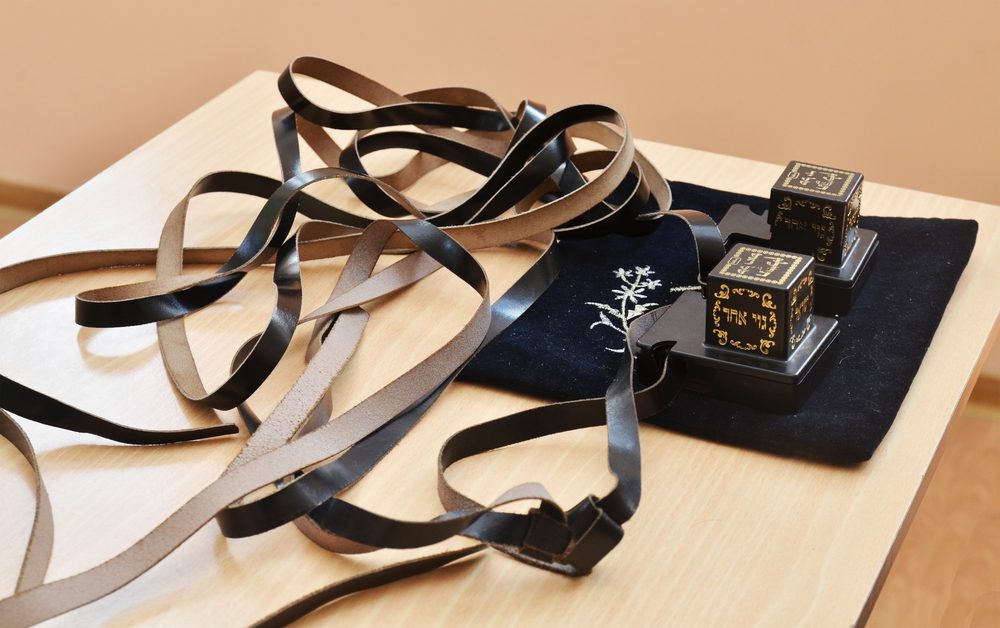 Тфілін шель яд кріпиться на руку, на біцепс, з боку серця. Ремінець обмотують навколо руки за встановленим порядком. Ідея в тому, що дія, сила руки, воля і рух мають бути пов’язані з заповідями.
Тфілін шель рош кріпиться на голову, на місце над чолом. Ідея в тому, що думка і свідомість теж мають бути спрямовані заповіддю, а не лише емоцією чи імпульсом.
Чому тфілін надягають у будні, але не в суботу і великі свята. У юдаїзмі субота і свята самі по собі вважаються знаком союзу. Це час, який уже відділений і позначений. Тфілін теж знак, але буденного дня, коли нічого не відділяє людину від рутини. Тому в суботу тфілін не потрібні.
Чому це майже завжди чоловіча практика. У класичній ортодоксальній традиції тфілін належать до заповідей, прив’язаних до конкретного часу, і їх виконання не є обов’язком для жінок. У різних течіях сучасності це може трактуватися інакше, але якщо говорити про ортодоксальні громади, то тфілін це насамперед чоловічий обов’язок ранкового богослужіння.
Кіпа: маленька річ, яка постійно тримає межу
Кіпа здається найпростішим елементом, але саме її простота робить її ефективною. Вона не має «великого сенсу» у вигляді окремого ритуалу. Її сенс у тому, що вона постійна.
Кіпа нагадує: над людиною є щось більше, ніж вона сама. Це не про страх і не про приниження. Це про межу. Людина може бути розумною, успішною, правою, але кіпа фізично нагадує: ти не остаточна інстанція. Це дисципліна скромності, але не як моральна поза, а як стан у тілі.
Чому багато чоловіків носять кіпу постійно, а не лише в синагозі. Бо юдаїзм не підтримує поділ на «релігійне життя» і «звичайне життя». Якщо віра існує лише в храмі, вона програє побуту. Кіпа переносить усвідомлення в буденність.
Чому кіпи різні. За формою, тканиною, кольором інколи можна впізнати середовище людини, але це не правило віри. Це соціальна мова громади. Десь кіпа майже непомітна, десь навпаки підкреслено видима. Важливо, що релігійний сенс один: тримати над головою нагадування.
Капелюх: межа між буденним і публічним
Чорний капелюх у ортодоксальному середовищі не є заповіддю. Це традиційний елемент, який став нормою в багатьох громадах. Його сенс не в «таємній символіці», а в соціальній і духовній дисципліні.
Капелюх працює як стримування. Він робить образ менш індивідуальним. Людина ніби каже: я не створюю себе через моду. Я не роблю своє тіло рекламним носієм настрою. Це зменшує зовнішній шум і посилює відчуття серйозності.
Чому капелюх частіше в будні. Бо будні це час роботи, соціальних контактів, ринку, випадкових зустрічей. У цьому просторі зовнішність найбільше піддається спокусі самопрезентації. Капелюх стабілізує: ти той самий, незалежно від трендів і контекстів.
Чому десь капелюхи носять і литваки, і хасиди. Бо це не «хасидська річ» у вузькому сенсі, це загальна ортодоксальна естетика Східної Європи, яка закріпилася як мова спільноти. Різниця може бути в деталях, формі, тому коли і як носять.
Штраймл: святковість, яка має форму
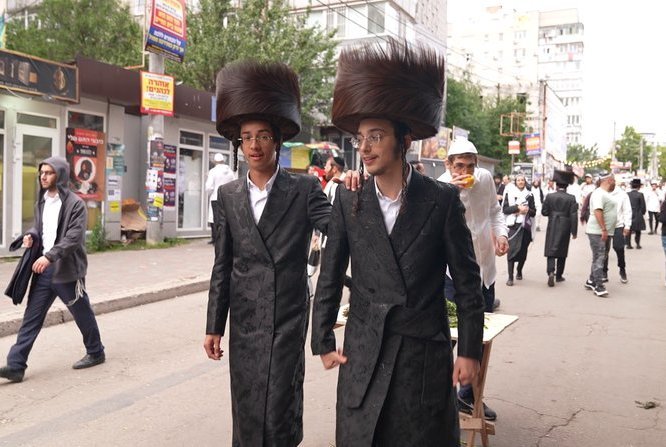
Штраймл це хутряна шапка, яку в багатьох хасидських громадах носять у суботу і великі свята, також на весіллях. Це не повсякденний предмет. Сам факт, що він прив’язаний до певного часу, вже пояснює його функцію.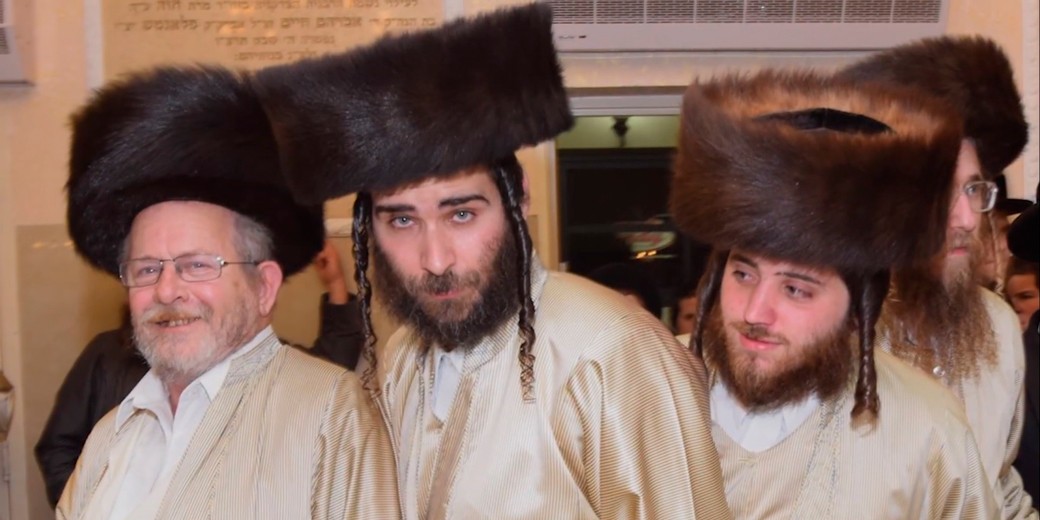
Штраймл підкреслює: сьогодні інший день. У суботу змінюється не лише розклад, а й стан людини. У юдаїзмі святість часу часто виражається через тіло: інша їжа, інший одяг, інший ритм руху, інша мова. Штраймл є частиною цієї системи.
Історично такі елементи також формувалися в конкретних регіонах і під впливом місцевих культур. Але в межах хасидського світу вони стали маркером «шабатної гідності», тобто поваги до дня, який відділений від буднів.
Таліт: вхід у молитву через дію
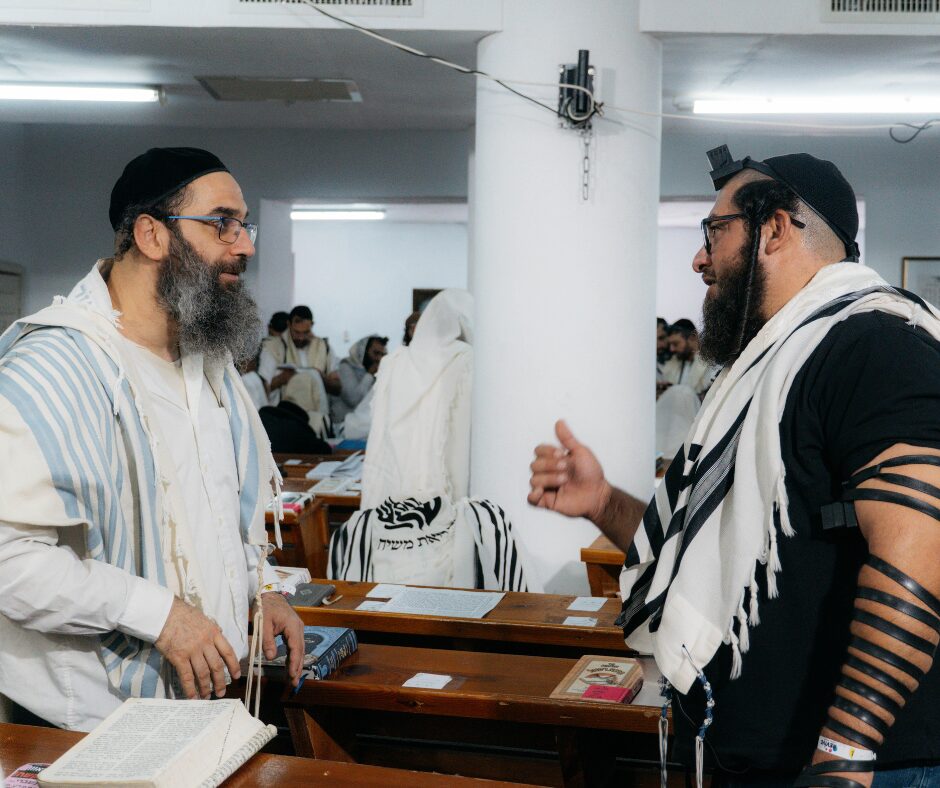
 Таліт це велике молитовне покривало, найчастіше біле зі смугами. Його надягають під час ранкової молитви. Важливе не те, як він виглядає, а що він робить з людиною.
Таліт створює межу, майже фізичну «рамку» для молитви. Він змінює відчуття простору, огортає, робить людину зосередженішою. Молитва в юдаїзмі не повинна бути лише внутрішньою емоцією. Вона має форму, порядок, тілесний жест. Таліт фіксує цей перехід із буденного стану в молитовний.
Цицит і таліт катан: заповідь, яка не дає забути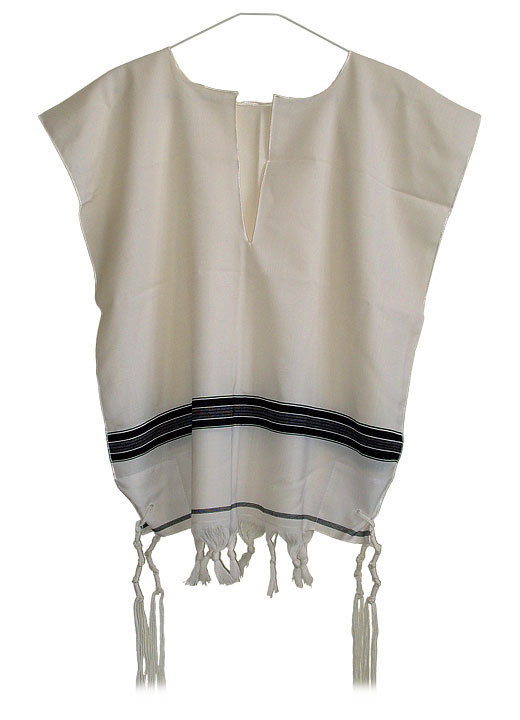

Цицит — це нитки з вузлами, прикріплені до кутів чотирикутного одягу. Це не декоративний елемент і не пізніша традиція, а пряма заповідь Тори. Її сенс сформульований дуже конкретно: людина має бачити ці нитки і згадувати про заповіді. У цій заповіді принципово важливий саме зір. Юдаїзм виходить з того, що думка нестійка, а те, що постійно потрапляє в поле зору, формує поведінку.
Цицит не пояснюють, як саме потрібно чинити. Вони не нав’язують мораль і не замінюють вибір. Вони лише створюють постійну присутність закону в повсякденності. Людина може бути втомленою, роздратованою, зайнятою побутом, але нитки залишаються. Вони не залежать від настрою. Саме в цьому їхня жорстка і водночас проста логіка.
Особливе значення має спосіб зав’язування вузлів і кількість витків. Це не випадковість і не естетика. Кожен елемент має числовий і текстовий сенс, пов’язаний із заповідями. Але для повсякденного життя важливіше не рахувати, а бачити. Заповідь працює навіть тоді, коли людина не аналізує її щоразу заново.
Щоб виконувати цю заповідь не лише під час молитви, існує таліт катан. Це невеликий натільний одяг із отвором для голови, який носять під сорочкою протягом усього дня. До його чотирьох кутів прикріплені цицит. Таким чином заповідь стає не епізодичною, а постійною.
Таліт катан не має виглядати красиво і не призначений для демонстрації. Його часто навіть не видно повністю. Проте цицит можуть трохи визирати з-під одягу. Для одних це принципово, для інших ні. У різних громадах ставлення до цього відрізняється. Але функція залишається незмінною: нагадування, яке не вимикається.

 Лапсердак, капота, рекель: традиція як форма стриманості
Довгі чорні сюртуки не є заповіддю. Це збережена форма одягу східноєвропейських євреїв, яка стала нормою в частині ортодоксальних громад. Чому вона збереглася. Бо вона підтримує стиль життя, де індивідуальність не виставляють напоказ, а дисциплінують.
Однаковість одягу робить соціальні відмінності менш помітними. Вона також зменшує роль моди як мови статусу. У цьому є і духовний сенс, і соціальна функція.
Гартл: пояс як внутрішня межа під час молитви
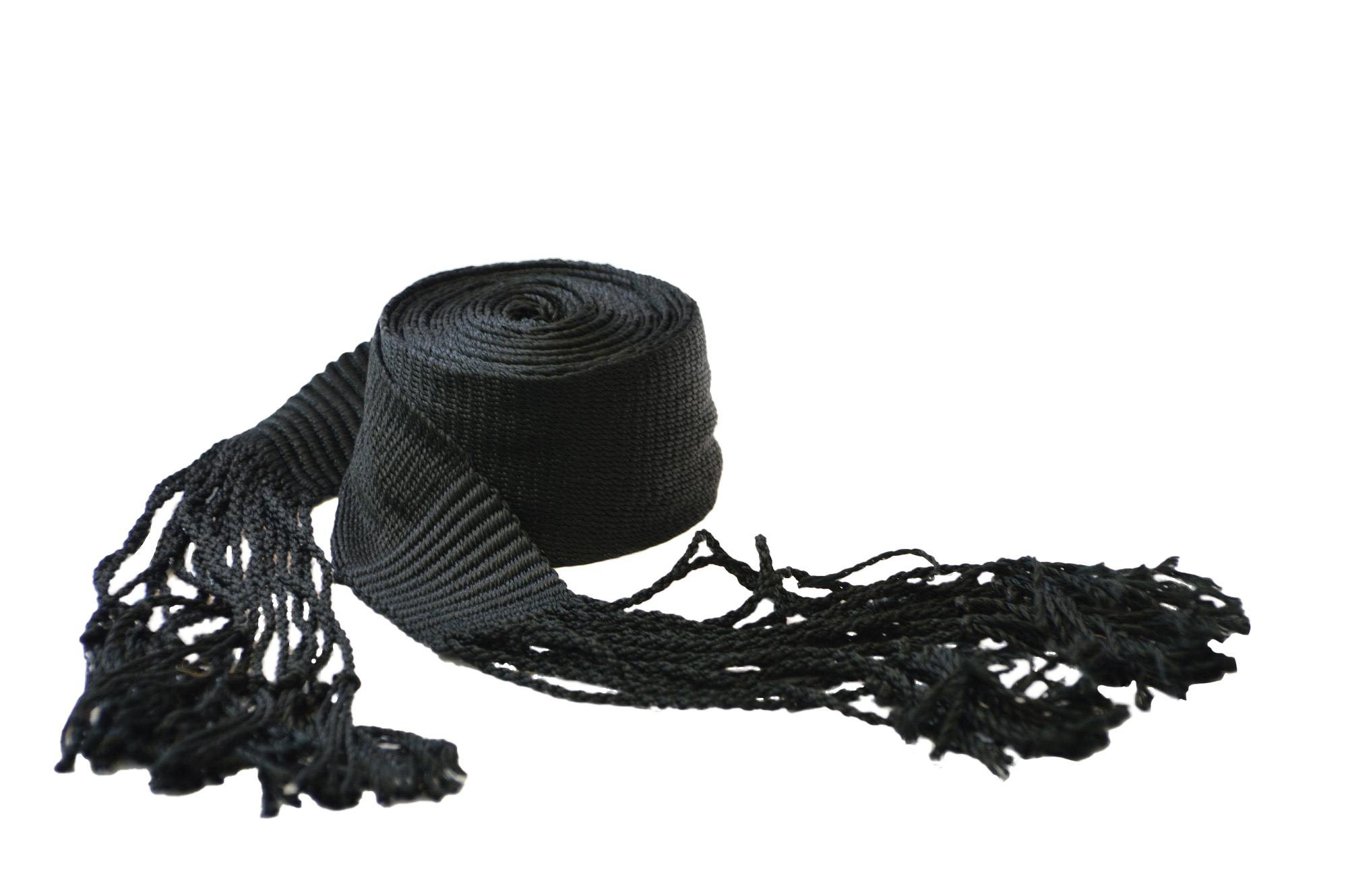
Гартл це пояс або шнур, яким підперізуються під час молитви. Його сенс у створенні межі між верхньою частиною тіла, що асоціюється з думкою і серцем, і нижньою, що асоціюється з фізичними потребами.
Це не «магічне розділення». Це дисципліна уваги: під час молитви людина ніби збирає себе, відділяє внутрішнє зосередження від побутових імпульсів. Саме тому гартл не обов’язковий для всіх однаково, але у багатьох хасидських середовищах це важлива практика.
Пейси: не прикраса, а виконання заповіді
Пейси — це пасма волосся на скронях, які залишають незістриженими відповідно до заповіді Тори про заборону «округляти краї голови». Йдеться не про окрему форму зачіски, а про обмеження дії: не зрізати певні ділянки волосся визначеним способом. Тобто заповідь формулюється не як вимога «мати пейси», а як заборона конкретної дії з волоссям. Пейси є наслідком цього обмеження, а не декоративною метою.
Саме тому форма, товщина і довжина пейсів не стандартизовані. У різних громадах вони можуть виглядати майже непомітно або, навпаки, бути довгими і чітко окресленими. Є середовища, де пейси закладають за вуха, є ті, де їх залишають вільно звисати. Це не суперечності і не «різні тлумачення віри», а різні практичні способи виконання одного припису.
Важливо розуміти, що пейси не створені для візуального ефекту. Вони не покликані прикрашати і не мають символізувати духовний рівень людини. У традиційній логіці це тілесне нагадування про межі, встановлені заповіддю. Людина щодня бачить у дзеркалі, що є речі, які не підпорядковуються її смаку, моді чи зручності.
Жіночий одяг: цніут як система приватності
У жіночому релігійному одязі центральним є принцип цніут, скромності. Це слово часто неправильно перекладають як «закритість», але точніше говорити про приватність. Є речі, які не є публічними.
Покриття волосся для заміжніх жінок належить саме до цього принципу. Волосся вважається частиною привабливості, яку не виставляють для сторонніх. Звідси тихель, хустка, якою покривають волосся, і шейтель, перука, яку носять замість хустки. Для зовнішнього спостерігача перука може виглядати як суперечність, але логіка проста: показувати можна «зовнішній образ», але не власне волосся.
Одяг також має правила: довжина спідниць, рукави, непрозорість, відсутність надмірної обляганості. Сенс не в тому, щоб зробити жінку невидимою, а в тому, щоб публічний простір не перетворювався на ринок поглядів. У різних громадах норми різняться, але спільний принцип один: межі між приватним і публічним.
 Щоденний і святковий одяг, особливо шабат
У юдаїзмі одяг чітко прив’язаний до ритму часу. Йдеться не про зміну стилю заради настрою, а про матеріальне підкреслення того, що день має інший статус. Саме тому шабатній одяг існує окремо від буденного і ніколи не зводиться до ідеї «парадності».
Шабат не є продовженням буднів з додатковими обмеженнями. Це інший часовий вимір. І одяг допомагає тілу це відчути. Людина не лише знає, що настав шабат, вона відчуває це фізично: інший дотик тканини, інша посадка, інша зібраність у рухах. Юдаїзм свідомо використовує матеріальне, щоб позначити нематеріальне.
Шабатній одяг зазвичай охайніший і підготовлений заздалегідь. Його не вибирають у поспіху і не комбінують випадково. Підготовка до шабату починається ще до його настання, і одяг є частиною цієї підготовки. Це не про красу для інших. Це про повага до часу, який вважається святим.
У різних громадах зовнішні форми можуть суттєво відрізнятися. У хасидських середовищах чоловіки часто вдягають штраймл, спеціальні сюртуки, іноді інші елементи, які не носять у будні. В ортодоксальних громадах іншого типу це може бути просто найкращий костюм або інший, чітко відокремлений комплект одягу. Але принцип спільний для всіх: шабат має власний вигляд.
Чому це збереглося століттями
Ці практики вижили не через впертість і не через любов до старого. Вони вижили, бо створюють працюючу систему. Людина забуває. Втомлюється. Випадає з сенсу. А одяг і атрибути не залежать від настрою. Вони повертають увагу в тіло, у зір, у звичку.
Важливо й те, що ця система одночасно індивідуальна й колективна. Індивідуальна, бо вона дисциплінує конкретну людину. Колективна, бо вона формує спільний ритм і спільну мову: ми живемо так, і ми це бачимо на собі щодня.
 Religious Clothing in Judaism: Commandments Worn on the Body and Why It Has Worked for Centuries
In Judaism, clothing and attributes of faith do not perform the role of decoration. They are not created to impress, stand out, or confirm status. Their logic is different: to make spiritual life something that does not disappear between prayers. A person may have strong intentions, but in daily life, attention dissipates. This is exactly why in Judaism many commandments are built into the body, sight, touch, and daily habits.
This is a key difference. Here, they do not rely only on an internal state. Here, they create a system where faith constantly reminds of itself through simple, repeated things: what is on the head, what is on the body, what is in the field of vision, what touches the hand or the heart. Hence both the religious clothing and the objects that from the outside seem incomprehensible or excessive.
How and Why This Arose
Judaism was formed not in the conditions of a stable state, clear borders, and a protected cultural space. Its basic experience is exile, dispersion, and life among other cultures, often dominant and aggressive. In such a reality, the main threat to tradition consisted not only in physical destruction, but in slow dissolution. People could remain Jews by origin but lose the practice, the language of meanings, and the internal structure of life.
That is why in Judaism an understanding was formed early: knowledge in itself does not save. Texts can be known, remembered, even revered, but in everyday life, they are easily pushed to the periphery. When life is filled with work, household chores, and contacts with other cultures, a faith that exists only in the head quickly becomes background noise. It does not disappear immediately, but it ceases to define the choice and rhythm of life.
Therefore, Judaism followed the path of embodying faith in behavior. Not instead of thinking, but together with it. Commandments began to work not only as ideas, but as bodily, visual, repeated actions. What a person wears, sees, touches, and repeats daily has a significantly greater influence than what they occasionally reflect upon. Religious clothing and attributes arose from two different but interconnected sources.
The first source is the direct prescriptions of the Torah. These include such commandments as tzitzit and tefillin. They are not a product of culture or historical context. These are norms that from the very beginning were intended as bodily reminders. In these commandments, it is fundamentally important that a person sees, feels, and performs, and not just understands. Faith here is not an abstraction, but a constant presence in life.
Tefillin: Boxes That Tie the Commandment to the Body
Tefillin are two black leather boxes with straps. Inside are parchments with excerpts from the Torah, written by hand according to strict rules. Tefillin is not a decoration and is not an amulet. It is the fulfillment of a commandment in which physicality is specifically important. The commandment is not simply read; it is literally “tied” to the person.
There are two tefillin:
Tefillin shel yad is fastened on the arm, on the bicep, on the side of the heart. The strap is wrapped around the arm according to an established order. The idea is that action, the strength of the hand, will, and movement must be connected with the commandments.
Tefillin shel rosh is fastened on the head, on the place above the forehead. The idea is that thought and consciousness must also be directed by the commandment, and not just by emotion or impulse.
Why tefillin are put on during weekdays, but not on Saturday and major holidays. In Judaism, Saturday and holidays themselves are considered a sign of the covenant. This is a time that is already set apart and marked. Tefillin is also a sign, but of a mundane day, when nothing separates a person from routine. Therefore, on Saturday, tefillin are not needed.
Why this is almost always a male practice. In the classical Orthodox tradition, tefillin belong to the commandments tied to a specific time, and their performance is not an obligation for women. In various modern movements, this may be interpreted differently, but if speaking about Orthodox communities, then tefillin is primarily a male obligation of the morning service.
Kippah: A Small Thing That Constantly Holds the Boundary
The kippah seems to be the simplest element, but it is precisely its simplicity that makes it effective. It does not have a “great sense” in the form of a separate ritual. Its sense is that it is constant.
The kippah reminds: there is something greater above the person than themselves. This is not about fear and not about humiliation. This is about the boundary. A person can be smart, successful, right, but the kippah physically reminds: you are not the final authority. This is a discipline of modesty, but not as a moral pose, but as a state in the body.
Why many men wear a kippah constantly, and not only in the synagogue. Because Judaism does not support the division into “religious life” and “ordinary life.” If faith exists only in the temple, it loses to everyday life. The kippah transfers awareness into the mundane.
Why kippahs are different. By the shape, fabric, and color, one can sometimes recognize a person’s environment, but this is not a rule of faith. This is the social language of the community. In some places the kippah is almost invisible, in others, on the contrary, emphasized and visible. It is important that the religious sense is one: to hold a reminder above the head.
The Hat: The Boundary Between the Mundane and the Public
The black hat in an Orthodox environment is not a commandment. It is a traditional element that has become a norm in many communities. Its sense is not in “secret symbolism,” but in social and spiritual discipline.
The hat works as a restraint. It makes the image less individual. The person as if says: I do not create myself through fashion. I do not make my body a commercial carrier of mood. This reduces external noise and strengthens the feeling of seriousness.
Why the hat is more frequent on weekdays. Because weekdays are the time for work, social contacts, the market, and random meetings. In this space, appearance is most susceptible to the temptation of self-presentation. The hat stabilizes: you are the same, regardless of trends and contexts.
Why in some places hats are worn by both Litvaks and Hasidim. Because it is not a “Hasidic thing” in a narrow sense, it is the general Orthodox aesthetic of Eastern Europe, which became established as the language of the community. The difference can be in the details, the shape, and when and how they are worn.
Shtreimel: Festivity That Has a Form
The shtreimel is a fur hat that in many Hasidic communities is worn on Saturday and major holidays, also at weddings. This is not an everyday item. The very fact that it is tied to a certain time already explains its function.
The shtreimel emphasizes: today is a different day. On Saturday, not only the schedule changes, but also the state of the person. In Judaism, the holiness of time is often expressed through the body: different food, different clothes, a different rhythm of movement, a different language. The shtreimel is part of this system.
Historically, such elements were also formed in specific regions and under the influence of local cultures. But within the Hasidic world, they became a marker of “Shabbat dignity,” that is, respect for the day that is set apart from weekdays.
Tallit: Entrance into Prayer Through Action
The tallit is a large prayer shawl, most often white with stripes. It is put on during the morning prayer. What is important is not how it looks, but what it does to the person.
The tallit creates a boundary, an almost physical “frame” for prayer. It changes the sense of space, envelops, and makes the person more focused. Prayer in Judaism should not be only an internal emotion. It has a form, an order, a bodily gesture. The tallit fixes this transition from a mundane state into a prayerful one.
Tzitzit and Tallit Katan: The Commandment That Does Not Let One Forget
Tzitzit are threads with knots attached to the corners of a four-cornered garment. This is not a decorative element and not a later tradition, but a direct commandment of the Torah. Its sense is formulated very specifically: a person must see these threads and remember the commandments. In this commandment, sight is fundamentally important. Judaism proceeds from the fact that thought is unstable, and that which constantly falls into the field of vision forms behavior.
Tzitzit do not explain exactly how one should act. They do not impose morality and do not replace choice. They only create a constant presence of the law in everyday life. A person can be tired, irritated, busy with chores, but the threads remain. They do not depend on the mood. Precisely in this is their rigid and at the same time simple logic.
The method of tying the knots and the number of coils has special significance. This is not an accident and not aesthetics. Each element has a numerical and textual sense connected with the commandments. But for daily life, it is more important not to count, but to see. The commandment works even when the person does not analyze it anew every time.
To perform this commandment not only during prayer, there exists the tallit katan. This is a small undergarment with an opening for the head, which is worn under the shirt throughout the whole day. To its four corners, tzitzit are attached. Thus, the commandment becomes not episodic, but constant.
The tallit katan is not meant to look beautiful and is not intended for demonstration. It is often not even fully visible. However, the tzitzit may peek out slightly from under the clothes. For some this is fundamental, for others not. In different communities, the attitude toward this differs. But the function remains unchanged: a reminder that does not switch off.
Laperdak, Kapote, Rekel: Tradition as a Form of Restraint
Long black coats are not a commandment. This is a preserved form of clothing of Eastern European Jews, which became the norm in part of the Orthodox communities. Why did it survive? Because it supports a lifestyle where individuality is not put on display, but is disciplined.
The uniformity of clothing makes social differences less noticeable. It also reduces the role of fashion as a language of status. In this, there is both a spiritual sense and a social function.
Gartel: The Belt as an Internal Boundary During Prayer
The gartel is a belt or cord with which one girds oneself during prayer. Its sense is in creating a boundary between the upper part of the body, associated with thought and heart, and the lower part, associated with physical needs.
This is not a “magical separation.” This is a discipline of attention: during prayer, a person as if collects themselves, separates internal concentration from mundane impulses. That is why the gartel is not mandatory for everyone equally, but in many Hasidic environments, it is an important practice.
Peyos: Not a Decoration, but the Fulfillment of a Commandment
Peyos are strands of hair on the temples that are left unshorn in accordance with the commandment of the Torah about the prohibition to “round the corners of the head.” It is not about a separate form of hairstyle, but about the limitation of an action: not to cut certain areas of hair in a determined way. That is, the commandment is formulated not as a requirement to “have peyos,” but as a prohibition of a specific action with hair. Peyos are a consequence of this limitation, and not a decorative goal.
That is why the shape, thickness, and length of peyos are not standardized. In different communities, they may look almost invisible or, on the contrary, be long and clearly defined. There are environments where peyos are tucked behind the ears, there are those where they are left to hang freely. These are not contradictions and not “different interpretations of faith,” but different practical ways of performing one prescription.
It is important to understand that peyos are not created for visual effect. They are not intended to decorate and are not meant to symbolize the spiritual level of a person. In traditional logic, this is a bodily reminder of the boundaries established by the commandment. Every day a person sees in the mirror that there are things that do not submit to their taste, fashion, or convenience.
Women’s Clothing: Tzniut as a System of Privacy
In women’s religious clothing, the central principle is tzniut, modesty. This word is often incorrectly translated as “closedness,” but it is more accurate to speak about privacy. There are things that are not public.
The covering of hair for married women belongs specifically to this principle. Hair is considered part of the attractiveness that is not put out for strangers. Hence the tichel, a headscarf with which they cover the hair, and the sheitel, a wig that is worn instead of a scarf. For an external observer, a wig may look like a contradiction, but the logic is simple: one can show the “external image,” but not one’s own hair.
Clothing also has rules: the length of skirts, sleeves, opacity, and the absence of excessive tightness. The sense is not to make the woman invisible, but to ensure that the public space does not turn into a market of gazes. In different communities, the norms vary, but the common principle is one: the boundaries between the private and the public.
Daily and Festive Clothing, Especially Shabbat
In Judaism, clothing is clearly tied to the rhythm of time. It is not about changing style for the sake of mood, but about the material emphasis that the day has a different status. That is why Shabbat clothing exists separately from the mundane and is never reduced to the idea of “formal wear.”
Shabbat is not a continuation of weekdays with additional restrictions. It is a different time dimension. And clothing helps the body to feel it. A person not only knows that Shabbat has arrived, they feel it physically: a different touch of the fabric, a different fit, a different composure in movements. Judaism consciously uses the material to mark the immaterial.
Shabbat clothing is usually neater and prepared in advance. It is not chosen in a hurry and not combined randomly. Preparation for Shabbat begins even before its arrival, and clothing is part of this preparation. This is not about beauty for others. This is about respect for the time that is considered holy.
In different communities, external forms can significantly differ. In Hasidic environments, men often put on a shtreimel, special coats, and sometimes other elements that are not worn on weekdays. In Orthodox communities of another type, it might be simply the best suit or another, clearly separated set of clothes. But the principle is common for all: Shabbat has its own look.
Why This Has Been Preserved for Centuries
These practices survived not because of stubbornness and not because of a love for the old. They survived because they create a working system. A person forgets. Gets tired. Falls out of meaning. But clothing and attributes do not depend on the mood. They return attention to the body, to the sight, to the habit.
It is also important that this system is simultaneously individual and collective. Individual, because it disciplines the specific person. Collective, because it forms a common rhythm and a common language: we live this way, and we see this on ourselves every day.