Чорний капелюх як символ внутрішньої тиші
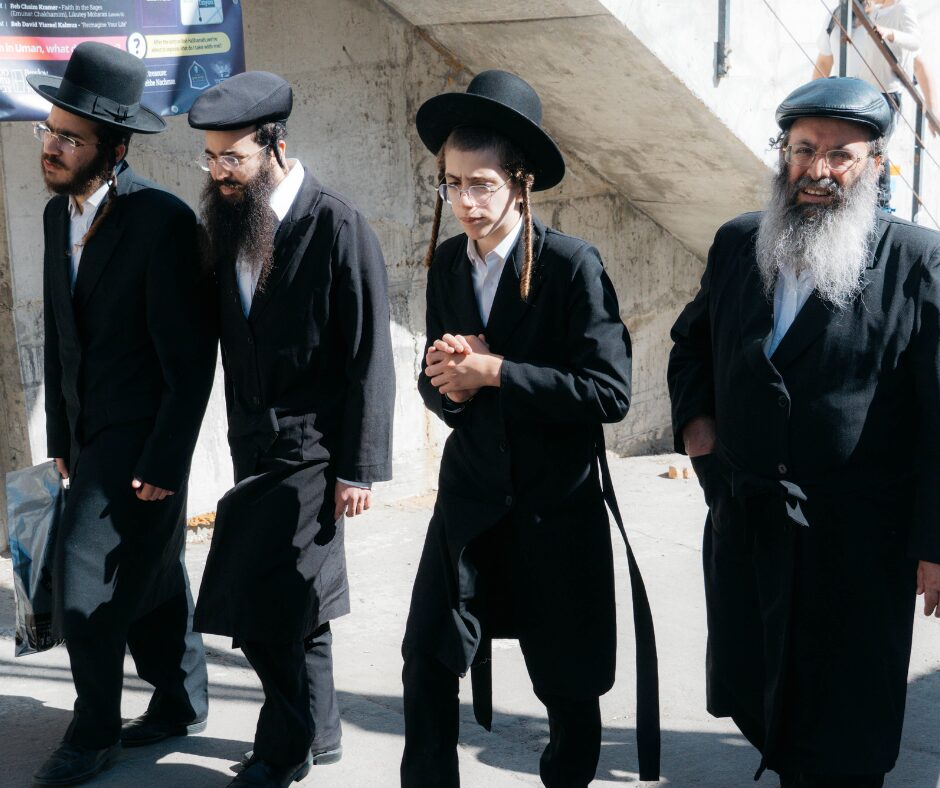
Чорний капелюх у хасидів майже завжди викликає спрощені пояснення. Його зводять до етнографії, застарілої моди або зовнішнього маркера релігійної групи. Але така оптика не враховує головного: у хасидській культурі одяг ніколи не був лише одягом. Він є частиною внутрішньої дисципліни, способом утримувати людину в певному стані. Чорний капелюх не покликаний щось показати світові. Він покликаний впливати на того, хто його носить.

Одяг як інструмент, а не прикраса
У хасидській традиції одяг не виконує комунікативної функції в сучасному розумінні. Він не має «говорити» про характер, статус, настрій чи смак людини. Тут одяг не є продовженням особистості і не працює як мова самопрезентації. Навпаки, його завдання зменшити кількість сигналів, які людина постійно транслює назовні і зчитує ззовні. Чим менше цих сигналів, тим легше зберігати внутрішню зібраність.
Чорний капелюх у цій логіці не є випадковим вибором. Він не змінюється залежно від події, емоційного стану чи соціального контексту. Весілля, похорон, будень, поїздка, робота, дорога – форма залишається тією самою. Це створює відчуття безперервності, в якій зовнішні обставини не визначають внутрішній стан. Людина не «перемикається» разом із середовищем, а залишається в одному ритмі.
Чорний колір тут принциповий саме через свою нейтральність. Це не символ жалоби і не демонстрація суворості. Це колір, який не вступає в діалог з простором. Він не притягує погляд, не змагається з іншими елементами, не створює візуального шуму. У хасидській логіці це спосіб прибрати все зайве, щоб не витрачати увагу на форму. Капелюх не додає значення і не несе додаткового сенсу. Він працює як фільтр, який зменшує кількість подразників.
Важливо також, що уніфікований одяг знімає потребу постійно обирати. У світі, де вибір стає джерелом втоми і тривоги, відсутність вибору сприймається не як обмеження, а як полегшення. Одяг перестає бути щоденним рішенням і перестає втручатися у внутрішній простір людини.
Внутрішня тиша як щоденна практика
Чорний капелюх часто інтерпретують як знак відмежування від світу або небажання взаємодіяти з сучасністю. Але зсередини традиції він читається інакше. Це не бар’єр між людиною і реальністю, а спосіб не розчинитися в ній. Хасидське життя побудоване на постійному поверненні до наміру, до усвідомленої присутності, до внутрішньої відповідальності за думки і дії.
Капелюх у цьому сенсі не є символом, який потрібно осмислювати щодня. Він працює на рівні звички. Його постійна присутність створює фонову дисципліну. Людина не щоразу замислюється, навіщо вона його носить, але саме ця стабільність і формує внутрішню тишу. Не тишу як відсутність звуків, а тишу як здатність не реагувати імпульсивно на зовнішній хаос.
Навіть у натовпі, шумі, побутових справах одяг залишається незмінним. Це важливо. Світ може бути нестабільним, агресивним, тривожним, але форма залишається тією самою. Таким чином зовнішня сталість підтримує внутрішню. Це не про ізоляцію, а про утримання власного ритму в середовищі, яке постійно намагається цей ритм збити.
Критика і дистанція від сучасності
Зовнішня критика чорного капелюха часто ґрунтується на візуальному ефекті. Відмінність одягу автоматично читається як відмова інтегруватися або як знак закритості. Частково це справді створює дистанцію між хасидськими громадами і світським суспільством. Але ця дистанція не є жестом проти світу і не має на меті демонстративне відокремлення.
Для самої спільноти відмова змінювати форму одягу під тиском часу не означає заперечення реальності. Це спосіб не дозволити зовнішнім змінам автоматично змінювати внутрішні орієнтири. У хасидському мисленні не кожна новизна є цінністю, і не кожна адаптація вважається прогресом. Зовнішній світ може змінюватися, але внутрішня логіка має залишатися послідовною.
Чорний капелюх у цьому контексті стає маркером стабільності. Не ідеологічної і не політичної, а екзистенційної. Він не заперечує сучасність, але й не дозволяє їй диктувати темп внутрішнього життя. Саме тому для хасидів цей елемент одягу не є архаїкою. Він виконує конкретну функцію в системі, де внутрішня тиша вважається не побічним ефектом, а необхідною умовою життя.
Символ у час війни і нестабільності
У контексті війни чорний капелюх починає читатися інакше. Коли світ стає непередбачуваним, будь-яка система, яка утримує людину в зібраному стані, перестає виглядати архаїчною. Вона стає функціональною. Капелюх не дає відповідей на питання війни і не захищає фізично. Але він підтримує внутрішню структуру, без якої неможливо витримати тривалий тиск реальності.
Саме тому хасиди не відмовляються від нього навіть у найскладніших обставинах. Не через впертість і не через традиціоналізм заради форми. А тому, що цей елемент одягу виконує свою тиху, непомітну, але важливу функцію. Чорний капелюх не є знаком минулого. Він не про ностальгію і не про протест. Це інструмент внутрішньої тиші, який дозволяє людині залишатися зібраною в світі, що постійно намагається цю зібраність зруйнувати.
Чому іноді бачать капелюх, накритий пакетом, і що це означає насправді
Смішні відео з чоловіком у чорному капелюсі, накритому пакетом, виникають не тому, що хасиди мають дивні ритуали, а через вирвану з контексту деталь релігійного побуту. У реальності мова не про «миття в капелюсі», а про поєднання кількох правил, які діють одночасно.
У релігійному єврейському середовищі покрита голова для чоловіка не є лише елементом зовнішнього вигляду. Це постійний стан, пов’язаний із усвідомленням присутності Бога. Залишатися з непокритою головою без нагальної причини вважається небажаним. Водночас існують ситуації, де головний убір може зазнати пошкодження або втратити свою форму, а капелюх, на відміну від кіпи, є дорогим і персональним предметом.
Тому в побутових умовах, де є вода, волога або ризик зіпсувати капелюх, використовують просте технічне рішення. Голову залишають покритою, але сам капелюх захищають. Пакет у цьому випадку не є символом і не має релігійного значення. Це звичайний захист речі, а не частина ритуалу.
Black Hat as a Symbol of Inner Silence
The black hat worn by Hasidim almost always provokes simplified explanations. It is reduced to ethnography, outdated fashion, or an external marker of a religious group. Yet such a view misses the essential point: in Hasidic culture, clothing has never been merely clothing. It is part of inner discipline, a way of holding a person in a particular state. The black hat is not meant to display something to the world. It is meant to influence the one who wears it.
Clothing as an Instrument, Not an Ornament
In Hasidic tradition, clothing does not serve a communicative function in the modern sense. It is not supposed to “speak” about personality, status, mood, or taste. It is not an extension of individuality nor a tool of self-presentation. On the contrary, its task is to reduce the number of signals a person constantly transmits outward and absorbs from the outside. The fewer such signals, the easier it is to preserve inner concentration.
Within this logic, the black hat is not a random choice. It does not change according to occasion, emotional state, or social context. Wedding, funeral, weekday, travel, work, the form remains the same. This creates a sense of continuity in which external circumstances do not dictate inner condition. A person does not “switch” with the environment but remains within one rhythm.
The color black is essential precisely because of its neutrality. It is not a symbol of mourning nor a display of severity. It is a color that does not enter into dialogue with space. It does not attract attention, compete visually, or create noise. In Hasidic logic, this is a way of removing excess so that attention is not wasted on form. The hat does not add meaning and does not carry additional symbolism. It functions as a filter that reduces stimuli.
Uniform clothing also removes the need for constant choice. In a world where choice becomes a source of fatigue and anxiety, the absence of choice is experienced not as restriction but as relief. Clothing ceases to be a daily decision and stops intruding into a person’s inner space.
Inner Silence as Daily Practice
The black hat is often interpreted as a sign of separation from the world or rejection of modernity. From within the tradition, however, it reads differently. It is not a barrier between a person and reality, but a way of not dissolving into it. Hasidic life is built upon continual return to intention, to conscious presence, to inner responsibility for thoughts and actions.
The hat in this sense is not a symbol that must be reinterpreted every day. It operates at the level of habit. Its constant presence creates background discipline. A person does not constantly reflect on why they wear it, yet that very stability forms inner silence. Not silence as the absence of sound, but silence as the capacity not to react impulsively to external chaos.
Even in crowds, noise, and daily concerns, the clothing remains unchanged. This matters. The world may be unstable, aggressive, anxious, but the form stays the same. External consistency supports internal steadiness. It is not about isolation, but about maintaining one’s own rhythm in an environment that continually attempts to disrupt it.
Criticism and Distance from Modernity
External criticism of the black hat is often based on its visual impact. Difference in clothing is automatically read as refusal to integrate or as a sign of closedness. To some extent, this does create distance between Hasidic communities and secular society. Yet this distance is not a gesture against the world, nor a demonstrative act of separation.
For the community itself, refusing to change clothing under the pressure of time does not mean denying reality. It is a way of preventing external change from automatically reshaping internal orientation. In Hasidic thought, not every novelty is a value, and not every adaptation is progress. The external world may transform, but inner logic must remain coherent.
In this context, the black hat becomes a marker of stability. Not ideological or political stability, but existential. It does not reject modernity, yet it does not allow modernity to dictate the tempo of inner life. For Hasidim, this element of dress is not archaic. It performs a specific function within a system where inner silence is not a byproduct, but a necessary condition of living.
A Symbol in Times of War and Instability
In times of war, the black hat acquires another layer of meaning. When the world becomes unpredictable, any structure that helps maintain inner composure ceases to look archaic and becomes functional. The hat does not answer the questions of war, nor does it provide physical protection. But it supports inner structure, without which prolonged pressure becomes unbearable.
That is why Hasidim do not abandon it even in the most difficult circumstances. Not out of stubbornness, nor tradition for tradition’s sake, but because this element of clothing fulfills its quiet, almost invisible yet important role. The black hat is not a sign of the past. It is not nostalgia and not protest. It is an instrument of inner silence, allowing a person to remain collected in a world that constantly attempts to shatter that composure.
Why a Hat Is Sometimes Covered with a Plastic Bag
Viral videos of a man in a black hat covered with a plastic bag circulate not because Hasidim follow strange rituals, but because a small detail of religious life has been taken out of context. In reality, this has nothing to do with “washing in a hat,” but with the intersection of several practical norms.
In a religious Jewish environment, a covered head for a man is not merely a stylistic element. It is a constant state associated with awareness of God’s presence. Remaining bareheaded without necessity is considered undesirable. At the same time, there are situations involving water or moisture that may damage the hat, which is an expensive and personal item.
In such everyday circumstances, a simple technical solution is used. The head remains covered, but the hat is protected. The plastic bag carries no religious meaning. It is not symbolic and not ritual. It is simply a practical way to preserve the hat while maintaining the norm of keeping the head covered.