Час і памʼять у юдаїзмі: чому важливіше не дата, а зміст
У єврейській традиції час ніколи не був нейтральним тлом для подій. Він не існує як порожня шкала, по якій рухаються дати. Час у юдаїзмі завжди наповнений сенсом, і саме тому дата сама по собі не є головною. Важливим є не число в календарі, а те, що людина в цей момент проживає, до чого вона повертається і що в собі оновлює.
Це принципово інший спосіб мислення, ніж лінійна модель часу, до якої звик сучасний світ, де минуле залишають позаду, теперішнє швидко витрачають, а майбутнє постійно планують.
Нелінійне сприйняття часу
Юдаїзм мислить час циклічно, але це не коло, яке просто замикається саме на собі. Йдеться не про механічне повторення одних і тих самих подій, а про повернення до сенсів, які щоразу відкриваються інакше.
Свята не «нагадують» про минуле і не відзначають річниці.
Вони знову і знову вмикають той самий духовний простір, у який людина входить уже з іншим досвідом, віком, болем і відповідальністю.
Час у цій логіці не тече прямою лінією, де минуле відрізане, теперішнє швидко зникає, а майбутнє постійно відсувається вперед. Він радше рухається спіраллю, де повернення не означає застою. Людина ніби проходить ті самі точки, але щоразу з іншої висоти. Саме тому повторення не сприймається як втома або рутина. Якщо сенс не відкрився цього року, він може відкритися наступного.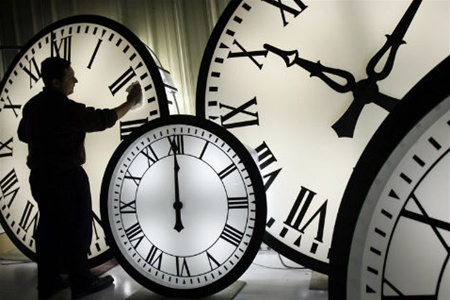
Це пояснює, чому в єврейській традиції уникають формулювань на кшталт «це було колись». Події не закриваються в минулому. Вихід з Єгипту не є історичним фактом, який вивчають і відкладають. Він постійно проживається як досвід звільнення від залежності, страху або внутрішнього рабства. Руйнування Храму не є археологічною темою. Воно залишається станом втрати, який знову і знову повертається в житті спільноти і окремої людини. Такий підхід змінює саме ставлення до памʼяті. Памʼять у юдаїзмі не архівна. Вона не зберігає події, щоб їх згадувати з безпечної відстані. Вона активна. Минуле постійно присутнє в теперішньому не як тягар, а як джерело запитань. Кожне свято ставить людину перед вибором: як цей сенс проявляється в моєму житті зараз.
Нелінійне сприйняття часу також пояснює, чому в юдаїзмі так важливе повернення.
Повернутися не означає відкотитися назад. Це означає перевірити себе заново. Те, що минулого року було прожите поверхнево, цього року може відкритися глибше. Те, що колись не мало значення, раптом стає ключовим.
У такому часі немає ідеї остаточного завершення. Жоден стан не є фінальним. Радість, біль, надія, втрата — все це частини руху, які не зникають, а переходять одна в одну. Саме тому єврейський календар не веде людину до «ідеального майбутнього». Він утримує її в живому процесі, де минуле, теперішнє і майбутнє не розділені стінами, а постійно розмовляють між собою.
Повернення як частина духовного руху
Повернення в юдаїзмі не сприймається як відкат або поразка. Це нормальний і необхідний елемент руху вперед. Людина не зобов’язана щоразу починати з чистого аркуша і не повинна відрізати минуле, щоб вважати себе «оновленою». Навпаки, духовний рух відбувається саме через повернення до вже прожитого, але з іншою оптикою і відповідальністю.
У цій логіці повторення свят не є рутинним колом.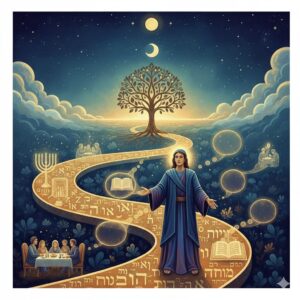
Якщо свято минуло і нічого не зрушилося всередині, це не означає, що воно «не спрацювало». Це сигнал про внутрішню паузу, про те, що людина ще не готова почути цей сенс. Повернення не гарантує результату. Воно лише створює можливість для переосмислення.
Повернення в юдаїзмі завжди активне. Це не ностальгія і не сум за минулим. Пам’ять тут не використовується для емоційного самозаспокоєння. Вона потрібна, щоб утримувати напрям, не втратити зв’язок між тим, що вже було пережито, і тим, що відбувається зараз. Минуле не ідеалізують і не виправдовують. Його тримають поруч як досвід, з яким доводиться рахуватися.
Саме тому в юдаїзмі повернення часто пов’язане з відповідальністю. Людина знову приходить до тих самих запитань: свобода, вибір, провина, пам’ять, надія. Але щоразу ці запитання звучать інакше, бо змінюється контекст життя. Повернення не закриває теми. Воно поглиблює її.
Ті самі свята — різний сенс щороку
Одна з ключових особливостей єврейського календаря полягає в тому, що свята не мають фіксованого емоційного сценарію. Вони не вимагають від людини певного настрою і не задають, що саме вона має відчувати. Свято визначає тему, але не диктує інтерпретацію.
Рош га-Шана може бути прожитий як момент надії або як момент тривоги.
І обидва стани є легітимними. Песах може стати радістю виходу або болісною розмовою про те, з чого людина досі не вийшла. Тіша бе-Ав може бути пережитий як особистий біль або як відчуття колективної пам’яті. Свято не оцінює емоції. Воно вміщує їх.
Це принципово відрізняє єврейську традицію від релігійних систем, де важливо «правильно» радіти або «правильно» сумувати. У юдаїзмі немає вимоги відповідати очікуваному стану. Є вимога бути присутнім у змісті. Людина приходить до свята з тим, що в ній є на цей момент, і саме це стає матеріалом для роботи.
Звʼязок між минулим, теперішнім і майбутнім
Юдаїзм не сприймає час як набір ізольованих відрізків, де кожен існує сам по собі. Минуле тут не вважається завершеним, теперішнє не є автономним, а майбутнє ніколи не сприймається як гарантоване. Усі три виміри постійно взаємодіють і впливають один на одного, створюючи єдину логіку руху.
Минуле в юдаїзмі не зберігається як архів подій.
Воно ставить запитання. Кожне свято, кожна історія, кожен текст звертаються не до того, що вже відбулося, а до того, що з цим робити зараз. Саме тому вихід з Єгипту, вигнання, руйнування і повернення не залишаються історичними сюжетами. Вони постійно перевіряють теперішнє: де я перебуваю у цій історії сьогодні.
Теперішнє, у свою чергу, не існує у вакуумі. Воно є відповіддю на минуле, навіть якщо ця відповідь ще не сформульована словами. Вчинки, вибір, спосіб життя — усе це відбувається на тлі пам’яті, яка не дозволяє діяти так, ніби до цього нічого не було. Теперішній момент у юдаїзмі — це не точка комфорту, а точка відповідальності.
Майбутнє при цьому залишається відкритим.
Воно не прописане наперед і не подається як нагорода або гарантований результат. Юдаїзм уникає ідеї неминучого прогресу. Майбутнє формується з того, як людина проживає теперішнє, пам’ятаючи минуле, але не застрягаючи в ньому. Саме ця відкритість робить рух можливим.
Тому в молитвах і текстах говорять не просто про події, а про їхній вплив. Пам’ять тут не фіксує і не консервує. Вона зобов’язує. Вона не дозволяє забути, але й не дозволяє зупинитися. Пам’ять може бути важкою, іноді болючою, але саме вона утримує сенс у моменти, коли теперішнє здається нестабільним, а майбутнє невизначеним.
У цьому зв’язку між часами немає остаточної крапки. Минуле продовжує говорити, теперішнє відповідає, а майбутнє залишається простором можливості. Саме так юдаїзм утримує людину не в ілюзії контролю над часом, а в чесному діалозі з ним.
Time and Memory in Judaism: Why Meaning Matters More Than the Date
In Jewish tradition, time has never been a neutral backdrop for events. It does not exist as an empty scale along which dates simply move. Time in Judaism is always filled with meaning, and for that very reason the date itself is not the main point. What matters is not the number on the calendar, but what a person lives through at that moment, what they return to, and what they renew within themselves.
This represents a fundamentally different mode of thinking from the linear model of time to which the modern world is accustomed, where the past is left behind, the present is quickly consumed, and the future is constantly planned.
A Non-Linear Perception of Time
Judaism conceives of time cyclically, yet this is not a circle that merely closes in on itself. It is not about the mechanical repetition of the same events, but about returning to meanings that reveal themselves differently each time.
Holidays do not simply “remind” people of the past, nor do they merely mark anniversaries. They reopen the same spiritual space again and again, a space that a person enters with new experience, age, pain, and responsibility.
In this logic, time does not flow in a straight line where the past is cut off, the present quickly disappears, and the future is endlessly pushed forward. Rather, it moves like a spiral, where return does not mean stagnation. A person passes through the same points, but each time from a different height. That is why repetition is not perceived as fatigue or routine. If a meaning did not reveal itself this year, it may reveal itself the next.
This explains why Jewish tradition avoids expressions such as “that was long ago.” Events are not sealed off in the past. The Exodus from Egypt is not merely a historical fact to be studied and set aside. It is continually relived as an experience of liberation from dependence, fear, or inner bondage. The destruction of the Temple is not an archaeological topic. It remains a state of loss that returns again and again in the life of the community and of the individual.
Such an approach transforms the very notion of memory. In Judaism, memory is not archival. It does not preserve events so that they can be recalled from a safe distance. It is active. The past is constantly present in the present, not as a burden, but as a source of questions. Each holiday places a person before a choice: how does this meaning manifest in my life now?
The non-linear perception of time also explains why return is so central in Judaism. To return does not mean to roll back. It means to reexamine oneself. What was lived superficially last year may open more deeply this year. What once seemed insignificant may suddenly become essential.
Within such time, there is no idea of final completion. No state is ultimate. Joy, pain, hope, loss — all are parts of a movement that do not vanish but transform into one another. The Jewish calendar does not lead a person toward an “ideal future.” It holds them within a living process in which past, present, and future are not separated by walls, but constantly speak to one another.
Return as Part of Spiritual Movement
In Judaism, return is not seen as regression or defeat. It is a normal and necessary element of forward movement. A person is not required to begin each time with a blank slate, nor to cut off the past in order to consider themselves “renewed.” On the contrary, spiritual movement occurs precisely through returning to what has already been lived, but with a different perspective and greater responsibility.
 In this logic, the repetition of holidays is not a routine cycle. If a holiday passes and nothing shifts internally, this does not mean it “failed.” It may signal an inner pause, that a person is not yet ready to hear that meaning. Return does not guarantee a result. It only creates the possibility for rethinking.
Return in Judaism is always active. It is not nostalgia and not longing for the past. Memory is not used for emotional self-soothing. It serves to maintain direction, to preserve the connection between what has already been experienced and what is happening now. The past is neither idealized nor justified. It is held close as an experience that must be reckoned with.
For this reason, return in Judaism is often linked with responsibility. A person comes again to the same questions: freedom, choice, guilt, memory, hope. Yet each time these questions sound different, because the context of life has changed. Return does not close a theme; it deepens it.
The Same Holidays, a Different Meaning Each Year
One of the key features of the Jewish calendar is that holidays do not have a fixed emotional script. They do not demand a particular mood, nor dictate what one must feel. A holiday defines a theme, but it does not impose an interpretation.
Rosh Hashanah may be lived as a moment of hope or as a moment of anxiety. Both states are legitimate. Passover may become the joy of liberation or a painful reflection on what one has not yet left behind. Tisha B’Av may be experienced as personal grief or as collective memory. The holiday does not judge emotions; it contains them.
This fundamentally distinguishes Jewish tradition from religious systems in which it is important to “rejoice correctly” or “mourn correctly.” In Judaism, there is no requirement to match an expected state. There is a requirement to be present within the meaning. A person comes to the holiday with whatever they carry at that moment, and that becomes the material for inner work.
The Connection Between Past, Present, and Future
Judaism does not perceive time as a set of isolated segments, each existing independently. The past is not considered finished, the present is not autonomous, and the future is never seen as guaranteed. All three dimensions constantly interact and influence one another, forming a single logic of movement.
The past in Judaism is not stored as an archive of events. It poses questions. Every holiday, every story, every text addresses not only what once happened, but what to do with it now. That is why the Exodus, exile, destruction, and return do not remain historical plots. They continually test the present: where am I in this story today?
The present, in turn, does not exist in a vacuum. It is a response to the past, even if that response has not yet been formulated in words. Actions, choices, ways of life — all unfold against the background of memory, which does not allow a person to act as though nothing came before. The present moment in Judaism is not a point of comfort, but a point of responsibility.
The future, meanwhile, remains open. It is not predetermined, nor presented as a reward or guaranteed outcome. Judaism avoids the idea of inevitable progress. The future is shaped by how a person lives the present, remembering the past without being trapped by it. This openness makes movement possible.
Thus, prayers and texts speak not merely of events, but of their impact. Memory does not fix or preserve; it obligates. It does not allow forgetting, but it also does not allow stagnation. Memory may be heavy, sometimes painful, yet it preserves meaning in moments when the present feels unstable and the future uncertain.
Within this connection between times, there is no final period. The past continues to speak, the present responds, and the future remains a space of possibility. In this way, Judaism keeps a person not in the illusion of controlling time, but in an honest dialogue with it.
How Holidays Shape a Person’s Inner Rhythm
Jewish holidays do more than structure the year. They shape a person’s inner rhythm: a time for pause, a time for joy, a time for silence, a time for memory, a time for responsibility. Within this calendar, there is no permanent state in which one must remain.
This rhythm does not allow stagnation. If a person remains too long in joy, a period of seriousness arrives. If one sinks too deeply into sorrow, movement toward life appears. The calendar functions as a system of inner balance, not as a mere collection of festive days.
Ultimately, Judaism proposes not control over time, but life within it. Not escape from the past, nor pursuit of the future, but the ability to be present in each cycle. That is why meaning matters more than the date. Not the number on the calendar, but what a person is able to understand and live through at that moment.